海派甜心
东北社理会推出流动健康车 方便居民领取医疗用品和食品_我的网站

A |
Chinese lawmakers began reviewing a draft law on combating cross-border corruption on Tuesday, a legislation which experts believe would help close legal gaps in investigating overseas corruption, pursuing fugitives and recovering illicit assets, while strengthening international cooperation and corporate compliance.
The draft was submitted for its first reading to the ongoing session of the Standing Committee of the National People's Congress, the country's top legislature, per Xinhua News Agency.
Huo Zhengxin, a professor at the China University of Political Science and Law, told the Global Times that the draft law represents a dedicated piece of legislation within China's anti-corruption legal framework and a major step forward in the country's law-based governance of foreign-related affairs. It will fill a legislative gap in combating cross-border corruption, Huo said.
As Chinese companies expand business overseas, cross-border corruption cases face challenges in obtaining evidence abroad, pursuing fugitives and recovering illicit assets. Existing anti-corruption laws have faced limitations in addressing such cases involving foreign affairs, making such dedicated legislation necessary, Huo said.
Structured into six chapters and 47 articles, the draft sets out the principles, scope and key provisions underpinning China's efforts to combat cross-border corruption. It also defines relevant operational mechanisms and institutional responsibilities, and seeks to strengthen case handling and international cooperation.
The draft further clarifies enterprises' obligations regarding integrity and compliance, and specifies legal liabilities for violations.
As one of the experts involved in drafting the legislation, Huo said a key innovation of the draft is to strengthen international cooperation and corporate integrity and compliance obligations. As evidence, suspects and illicit assets in cross-border corruption cases are often located overseas, the draft provides mechanisms including extradition, mutual legal assistance and repatriation, while aligning with relevant rules under the UN Convention against Corruption (UNCAC), said the expert.
The draft also makes clear that Chinese companies operating overseas, including both state-owned and private enterprises, have legal obligations to uphold integrity and compliance with domestic laws, Huo said.
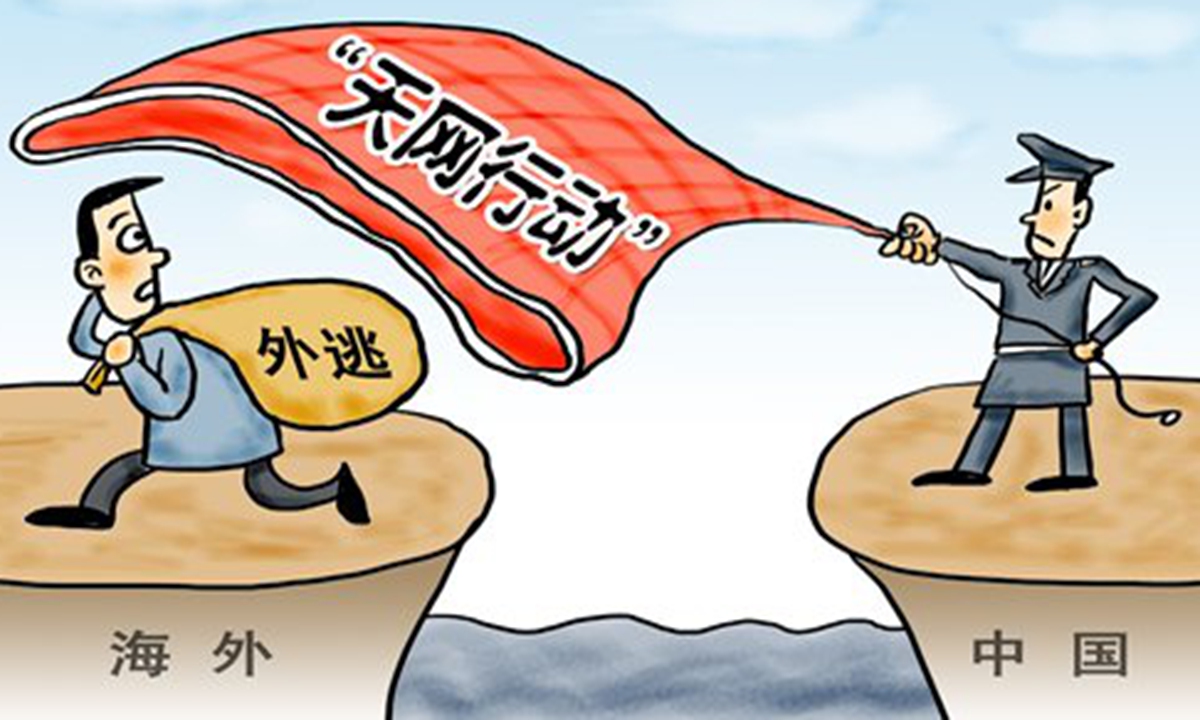
The legislation would also codify practices accumulated through China's past campaigns against cross-border corruption, such as Sky Net and Fox Hunt operations, turning them into a more systematic legal framework and strengthening the law's deterrent effect, according to Huo.
The draft law is a practical step to regulate the development of cross-border businesses and help build a world-class business environment aligned with market principles, the rule of law and international standards, Xinhua noted.
It is also expected to expand the legal tools available to combat cross-border corruption and help address challenges in detecting corruption, collecting evidence, recovering illicit assets and securing convictions, according to the report.
In January, CCTV News reported on the case of a former senior executive of China National Offshore Oil Corporation, who was accused of accepting large amounts of bribes that were concealed overseas, with a businessman allegedly acting as a "front" to collect the illicit payments.
The draft's explicit corporate integrity and compliance requirements would make it harder for individuals to disguise bribery and other corrupt practices through overseas projects in an attempt to circumvent domestic oversight, while further clarifying the extraterritorial reach of China's anti-corruption laws, Huo said.
The draft also contains provisions to counter the use of foreign countries' domestic anti-corruption laws to exercise "long-arm jurisdiction" over Chinese companies, which Huo described as another important innovation in China's foreign-related legal framework.
China has been deepening its efforts in international anti-corruption cooperation, with 963 corrupt fugitives repatriated to the country in 2025, according to a work report from the country's top anti-graft body, Xinhua reported.
。 东北社理会推出流动健康车,将医疗必需品和更健康的食品送入社区。

B | (图:东北社理会)东北社区发展理事会推出流动健康车,将医疗必需品和更健康的食品送入社区,方便行动不便或经济拮据的居民获取所需的物品。

C | 这个计划为期一年,预计能让超过1500名来自弱势家庭的年长者受惠。流动健康车会把成人纸尿片、牛奶、膏药布等物品运送到社区内交通便利的地点,让有需要的居民免费领取。这项计划率先在淡滨尼集选区开跑,之后流动健康车会前往阿裕尼、白沙-榜鹅和盛港集选区。

D | 东北社理会是在刷新计划的活动上,为流动健康车主持推介仪式。(图:东北社理会)东北社理会是在刷新计划(Project Refresh)的活动上,为流动健康车主持推介仪式。东北区市长朱倍庆说,他们是在非营利组织好人好事和赞助商Geoscan的帮助下,推出这项计划。他说:“整个活动,不包括健康车和人力费用,大概是15万元,赞助商捐了7万5000元,东北社理会也出7万5000元。

E | 15万元可以用来买健康用品,像是纸尿片、奶粉等等。这个成人尿片、牛奶等的价格都上涨了,年长者在经济上比较吃紧一点,而且这些很多年长者就觉得要去这个购物市场买这些用品再带回家是非常难的。在淡滨尼我们就选了五个点,让居民来拿这些物品。有些居民还是会觉得比较难把物品拿回家,我们还是会有志愿者帮忙他们。

F | ”今年有超过1000名义工参与刷新计划。

G | (图:东北社理会)91岁的曾干春是受益者之一。由于他行动不便,因此很难买到自己所需要的物品。

H | 流动健康车将这些用品送到他住家附近后,就方便他获取这些用品。另一方面,今年有超过1000名义工参与刷新计划,在淡滨尼和阿裕尼集选区翻新115个住家,是计划自2016年推行以来,参与人数最多的一次。
Current article:http://n8lbt3q.cengzaodengchawonin.cyou/news/20260826_243849.html
Published on:01:33:02